 Watch Displays
 Jewelry Displays
 Watch Boxes
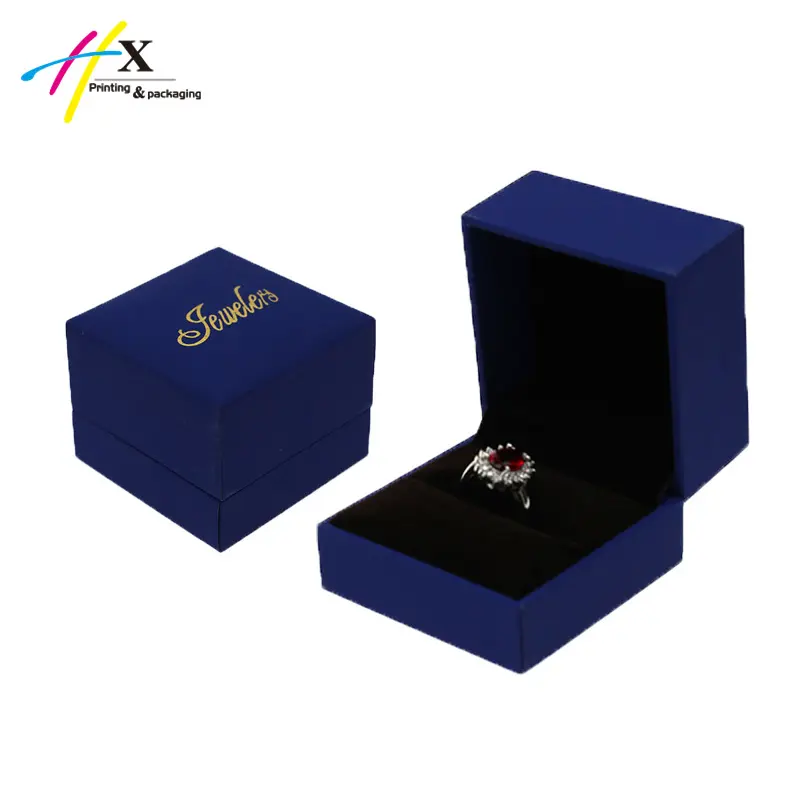 Jewelry Boxes
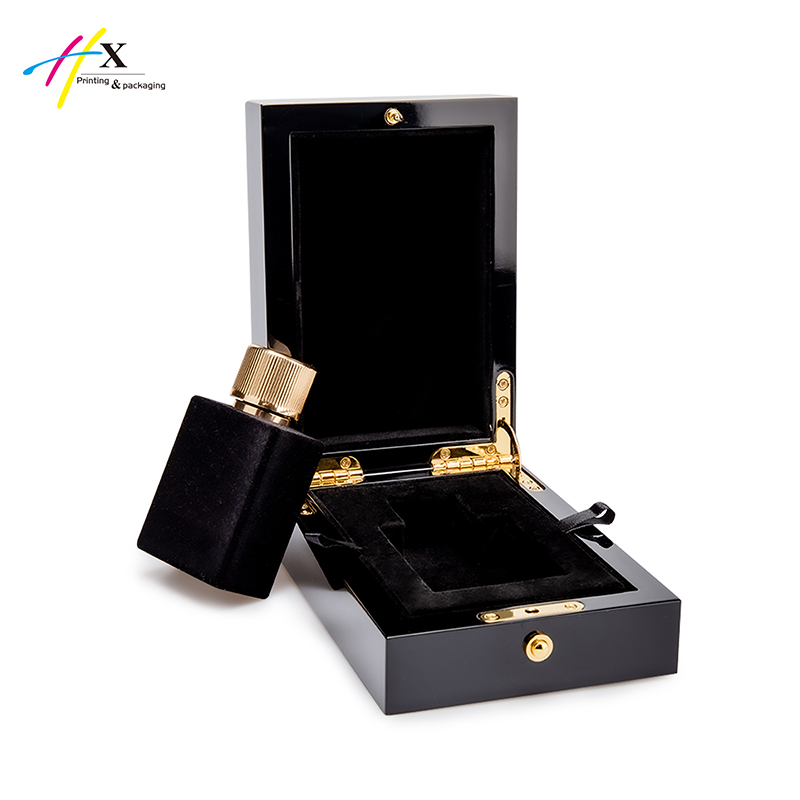 Perfume Boxes
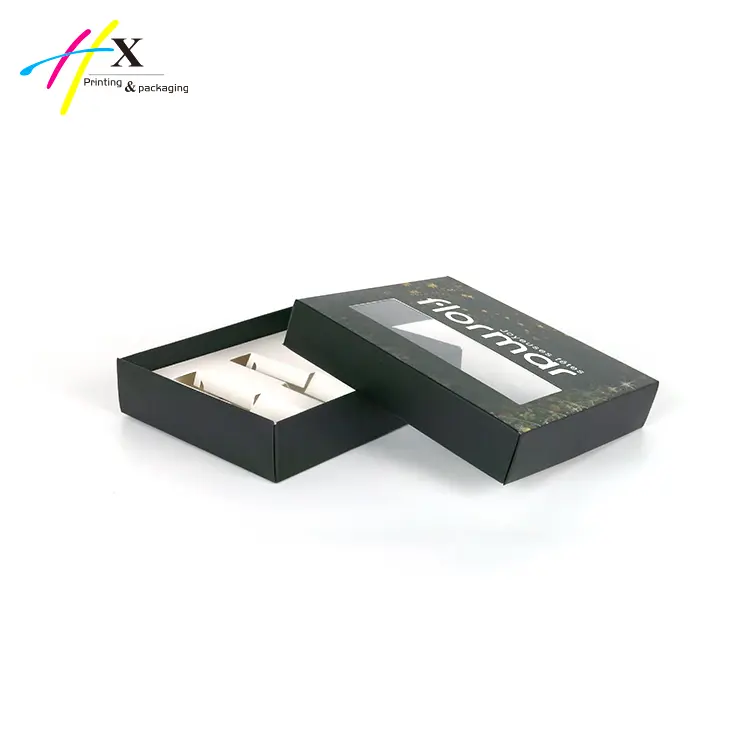 Paper Boxes
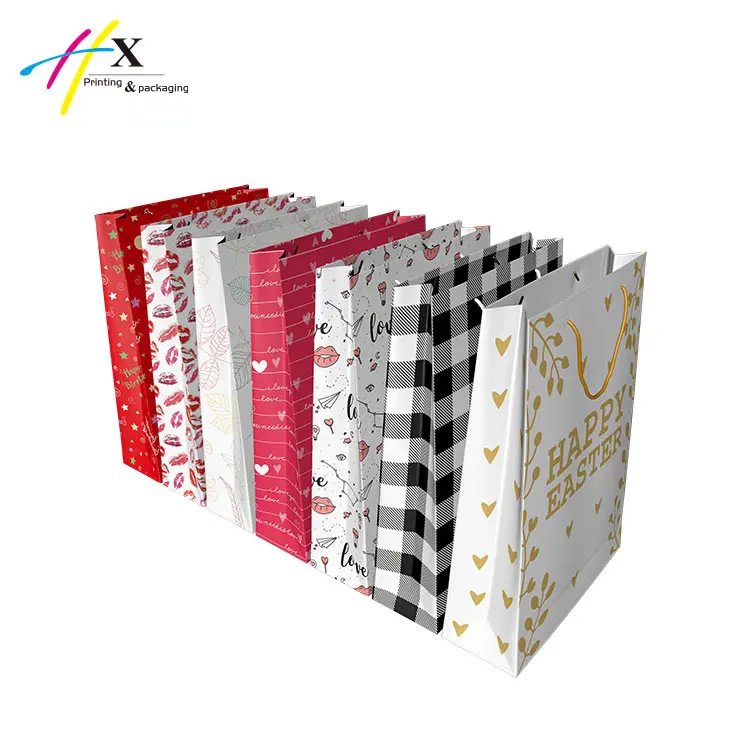 Paper Bags
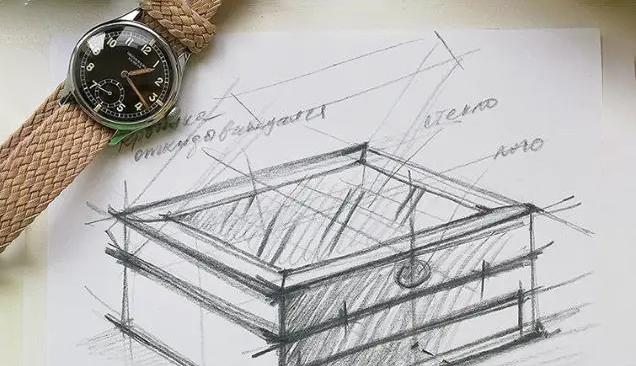 Design Lab
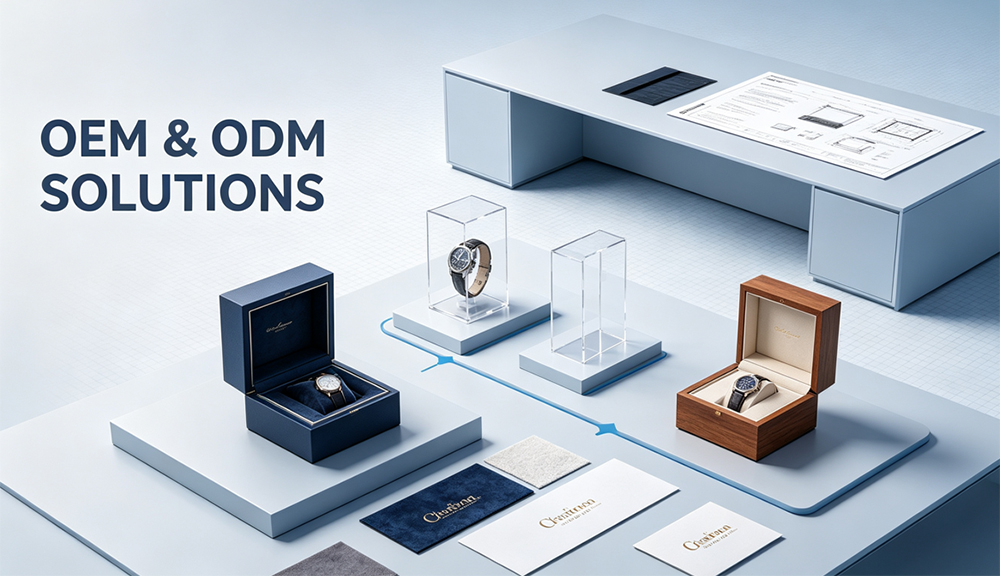 OEM&ODM Solution
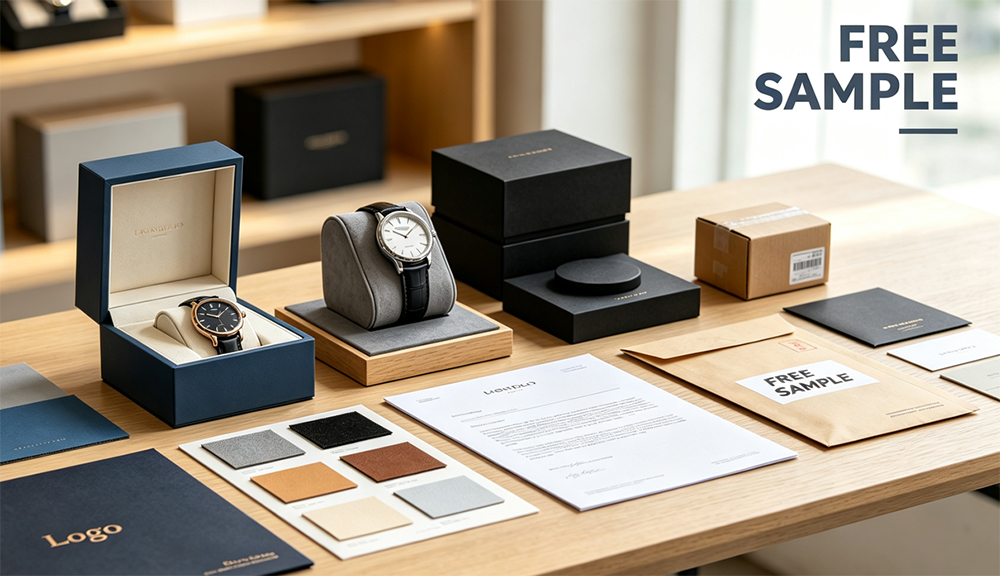 Free Sample
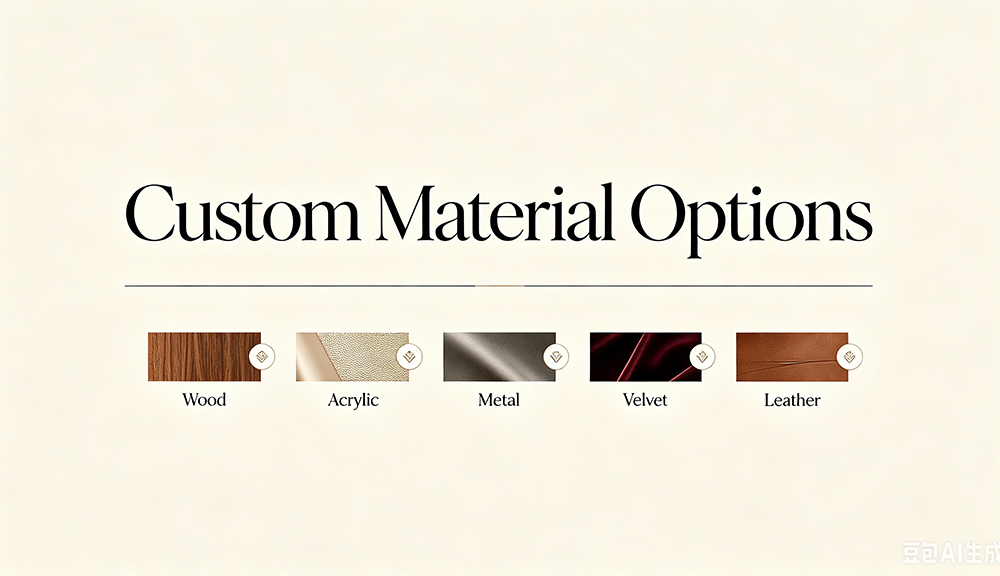 Custom Option
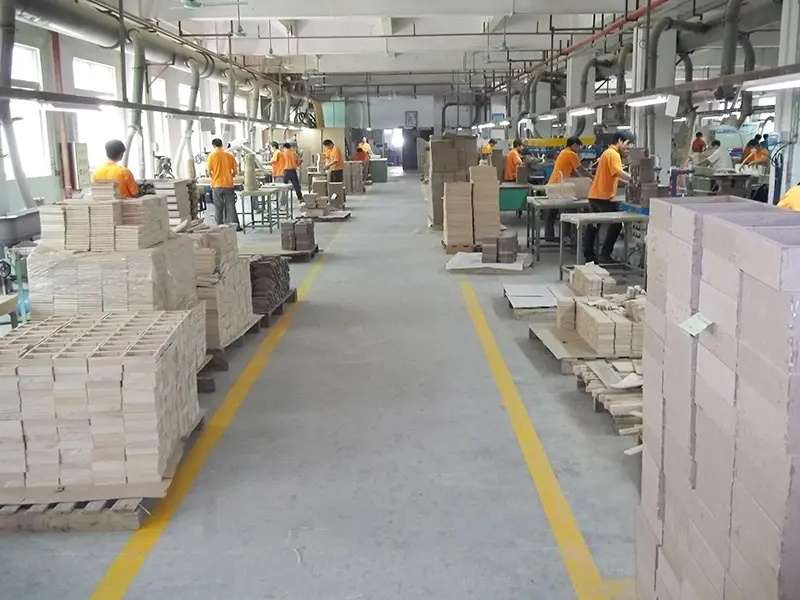 Factory Tour
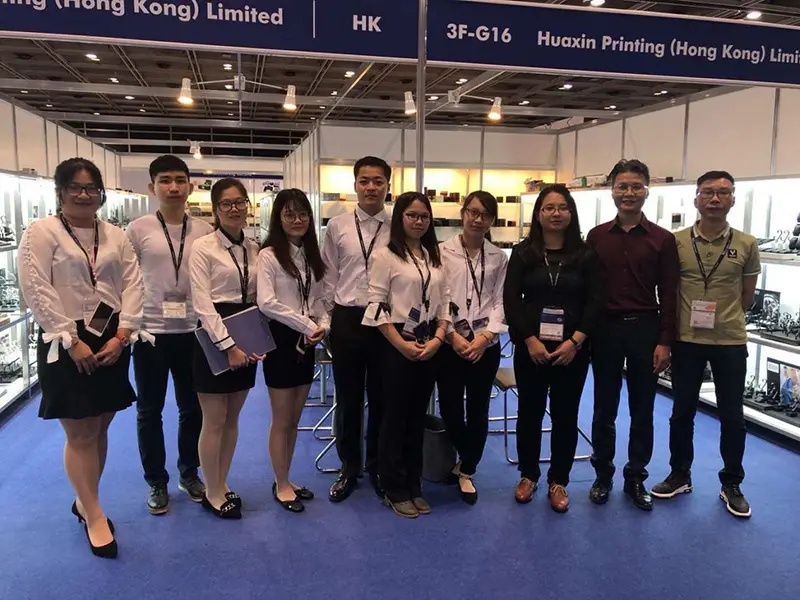 Our Team
 Our Story
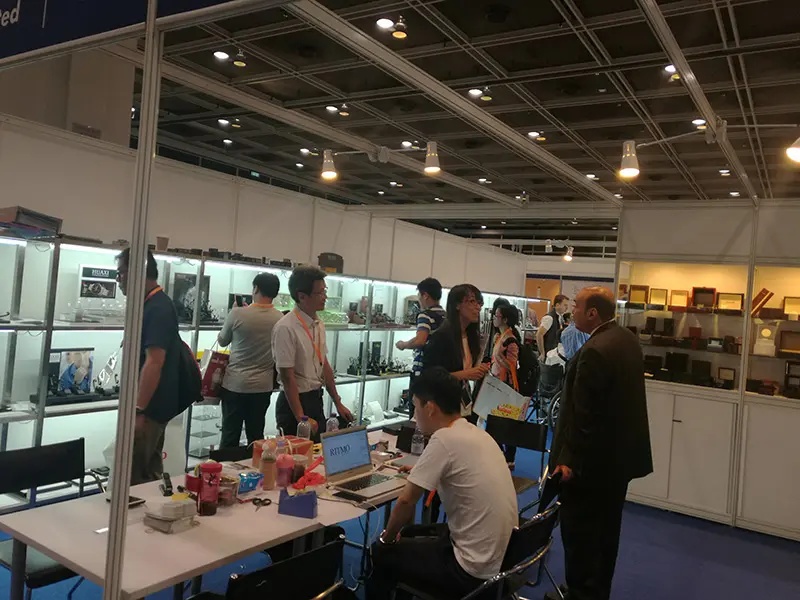 Exhibitor Plan
 Case Study
 Video
 News


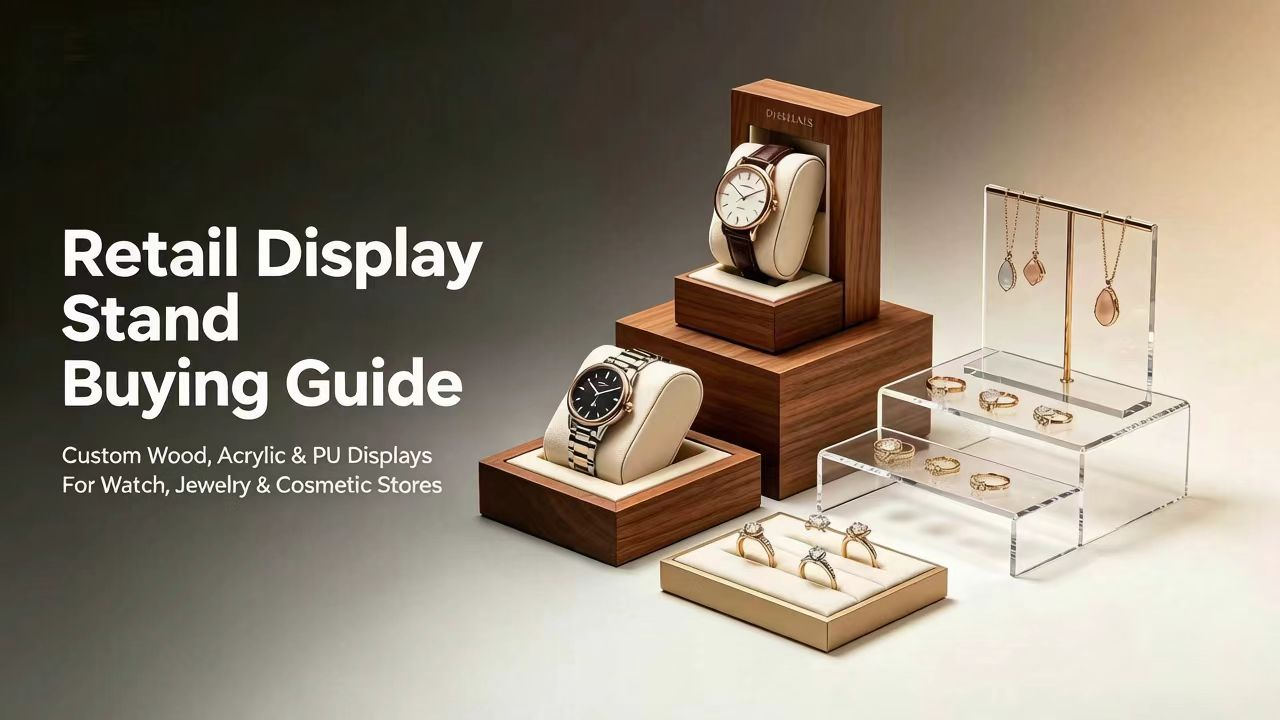
Watch Packaging Buying Guide: Luxury Watch Boxes, Watch Display Stands & Branded Retail Racks
Luxury mechanical and premium smartwatches represent precision engineering, timeless craftsmanship, and powerful emotional value for collectors and everyday consumers alike. For watch brands, retailers and boutique operators, packaging and in‑store displays are far more than simple storage fixtures. They serve as critical brand touchpoints that safeguard high‑value timepieces, shape perceived luxury, deliver memorable unboxing moments, and directly influence in‑store conversion rates. A well‑designed watch box protects polished cases, delicate dials and fine straps; purpose‑built watch display stands highlight product details for shoppers; and branded retail racks organize collections while reinforcing consistent brand identity across physical stores, pop‑up shops and showroom environments. Drawing on Huaxin Display’s more than 30 years of OEM and ODM manufacturing experience serving global luxury watch clients, this buying guide breaks down key specifications, material options, design considerations and common sourcing pitfalls for brands investing in custom watch packaging and retail display solutions.
The Strategic Role of Custom Watch Packaging & Displays
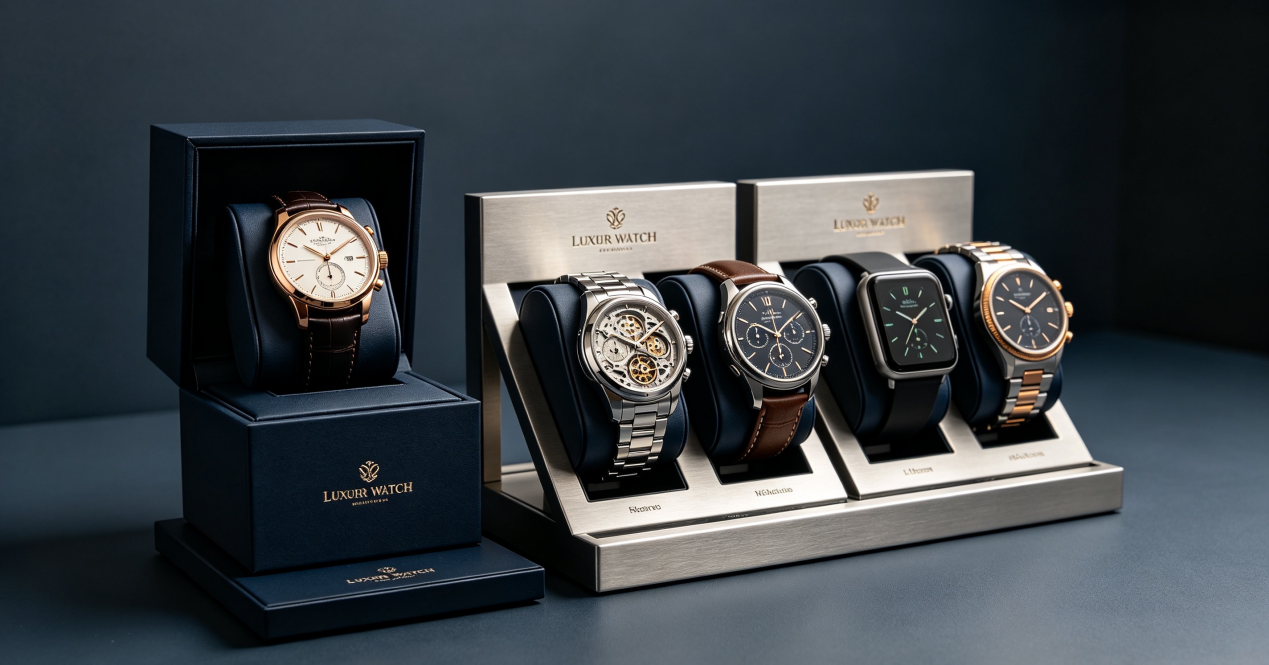
Fine watch products carry substantial material and sentimental value. Scratched cases, damaged crystal glass and deformed straps can ruin a customer experience and create costly product returns. Beyond basic physical protection, custom watch packaging and displays fulfil three core business objectives for watch brands: brand storytelling, customer experience enhancement, and retail performance improvement.
First, packaging tells your brand story before a customer touches the watch itself. The weight of a rigid watch box, the texture of surface finishing, embossed or hot‑foiled brand logos, and soft interior lining all communicate brand positioning. Minimalist matte finishes suit modern smartwatch lines; polished timber and leather constructions match heritage mechanical watch collections. Every material choice sends a signal to end‑users about quality and exclusivity.
Second, unboxing experience drives customer loyalty and social sharing. Luxury watch purchases are milestone moments for buyers. Thoughtfully engineered watch boxes with precise‑fit inserts, magnetic closures and coordinated accessories including certificate holders and branded gift elements turn a simple product hand‑over into a memorable ritual. Many customers share unboxing content across social platforms, delivering organic brand exposure.
Third, retail displays directly impact sales performance. In physical boutiques, department store counters and pop‑up locations, watch display stands and branded retail racks arrange inventory logically, draw shopper attention to hero SKUs, and allow customers to examine timepieces safely without unnecessary handling risk. Poor‑quality, mismatched or unstable displays make premium watches look cheap, confuse shoppers and slow down sales conversions.
For watch brand procurement teams, the challenge lies in balancing protection, aesthetics, budget, minimum order quantities, lead‑time timelines and sustainability requirements. Many brands make costly mistakes by selecting generic off‑the‑shelf boxes and displays that fail to match product dimensions, brand aesthetics or retail environment requirements. Working with an experienced OEM‑ODM manufacturer such as Huaxin Display enables brands to align packaging and display hardware fully with product specifications and retail strategy.
Custom Luxury Watch Boxes: Styles, Materials & Key Selection Criteria
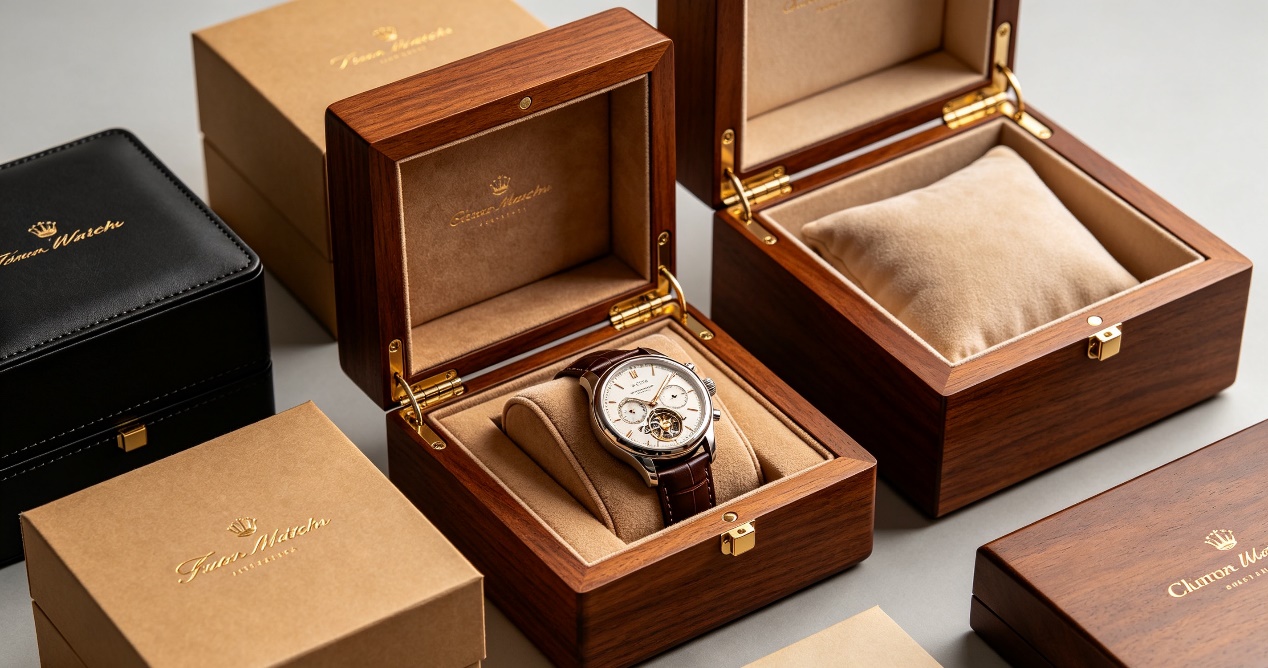
The watch box is the foundational piece of your packaging ecosystem. When sourcing custom watch boxes, you must evaluate outer construction, interior inserts, closure mechanisms, branding techniques and overall box dimensions, which must precisely fit your watch case size, strap thickness and included accessories. Ill‑fitting inserts are one of the most frequent defects in mass‑produced watch packaging: loose padding allows watches to shift during transit and cause surface scratches, while over‑tight cutouts make loading and unloading difficult for retail staff and end‑customers.
Popular Watch Box Construction Types
1.Rigid paper‑board watch boxes
Rigid cardboard boxes represent a versatile mid‑to‑premium option, widely used for contemporary watch brands and smartwatch ranges. Built with high‑density grey‑board core wrapped in specialty art paper, textured paper or coated surfaces, these boxes support magnetic flip‑lid, lid‑and‑base, and drawer‑style formats. Interior inserts typically combine velvet‑covered foam or EVA cushions with shaped watch pillows to cradle watch cases and bracelets. Hot‑stamping, silk‑screen printing and UV printing deliver crisp logo finishes. Rigid paper boxes offer competitive unit pricing and flexible custom sizing, making them suitable for medium‑volume production runs.
2.PU / Vegan‑Leather Watch Boxes
Faux‑leather wrapped rigid boxes deliver a soft, tactile luxury feel without genuine leather costs. Available in matte, grain and smooth surface textures, these boxes are common for mid‑high‑end mechanical watch collections. Hinged flip‑lid structures are most typical, paired with velvet or suede‑like Alcantara‑style linings. Embossed and debossed logo effects perform exceptionally well on PU surfaces, creating subtle premium branding. Many sustainable‑focused watch lines select vegan‑leather materials to align with corporate environmental policies.
3.Solid Wood Watch Boxes
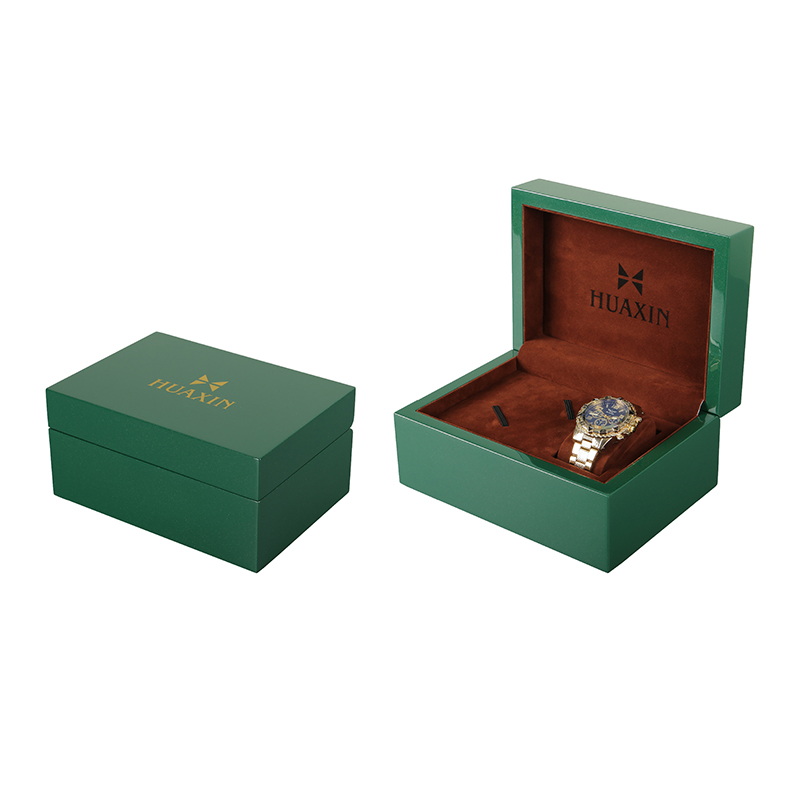
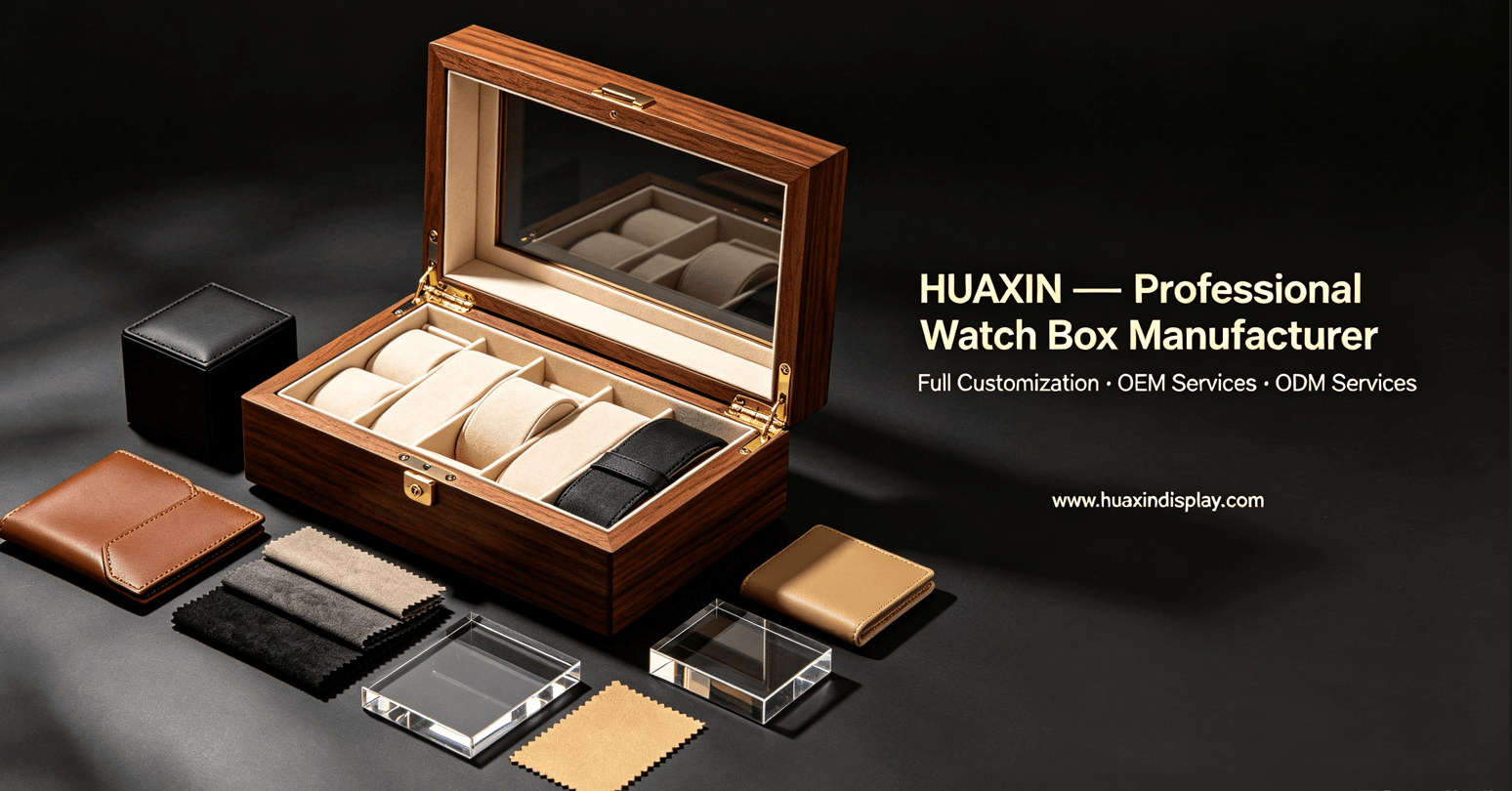
Solid hardwood watch boxes crafted from walnut, oak or mahogany sit at the highest luxury tier. Polished varnish, matte oil and stain finishing options create distinct visual characters. Wooden watch boxes are frequently used for limited‑edition releases, collector‑grade timepieces and multi‑watch storage cases. Wood boxes support laser engraving of brand marks and serial‑number plates for special‑run collections. They carry higher unit costs, longer sampling cycles and heavier shipping weights, so brands need to plan logistics and budgets accordingly.
Critical Interior Protection Details
The interior is where watch box functionality succeeds or fails. Standard watch pillows support metal bracelets and leather straps; custom contoured EVA or foam inserts can hold watches alongside extra straps, tool kits, warranty cards and authenticity certificates. Soft velvet, flocking and suede‑like linings prevent micro‑scratches on polished metal watch cases. Avoid hard, unlined plastic surfaces that risk marring high‑gloss watch finishes.
Branding methods include hot foil stamping, embossing, debossing, screen printing, UV digital printing and laser engraving. Match branding technique to your surface material: hot foil works beautifully on paper and PU; laser engraving is ideal for timber surfaces.
Watch Display Stands for In‑Store Merchandising
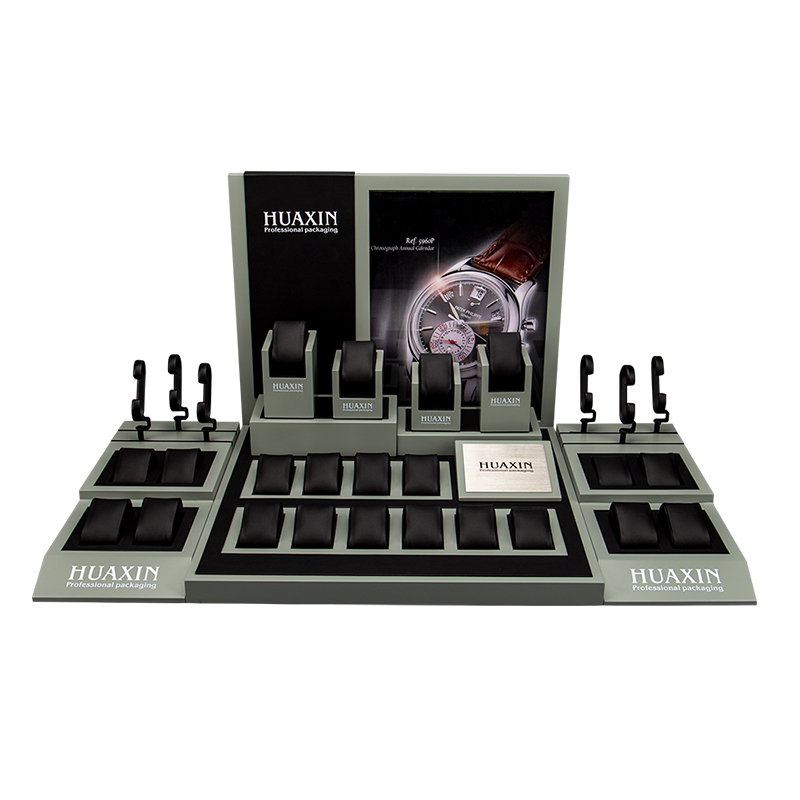
Once your product reaches retail points of sale, watch display stands become your most important marketing hardware. Display stands are not one‑size‑fits‑all; requirements differ drastically between luxury boutiques, department‑store counters and high‑traffic electronics retail outlets where smartwatches are sold alongside accessories.
Pedestal Hero Display Stands
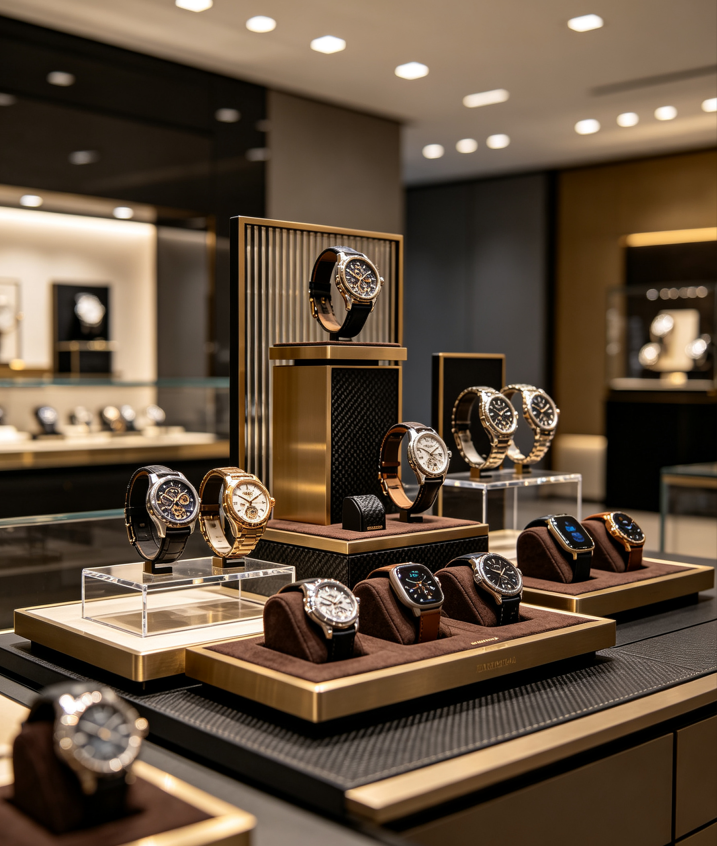
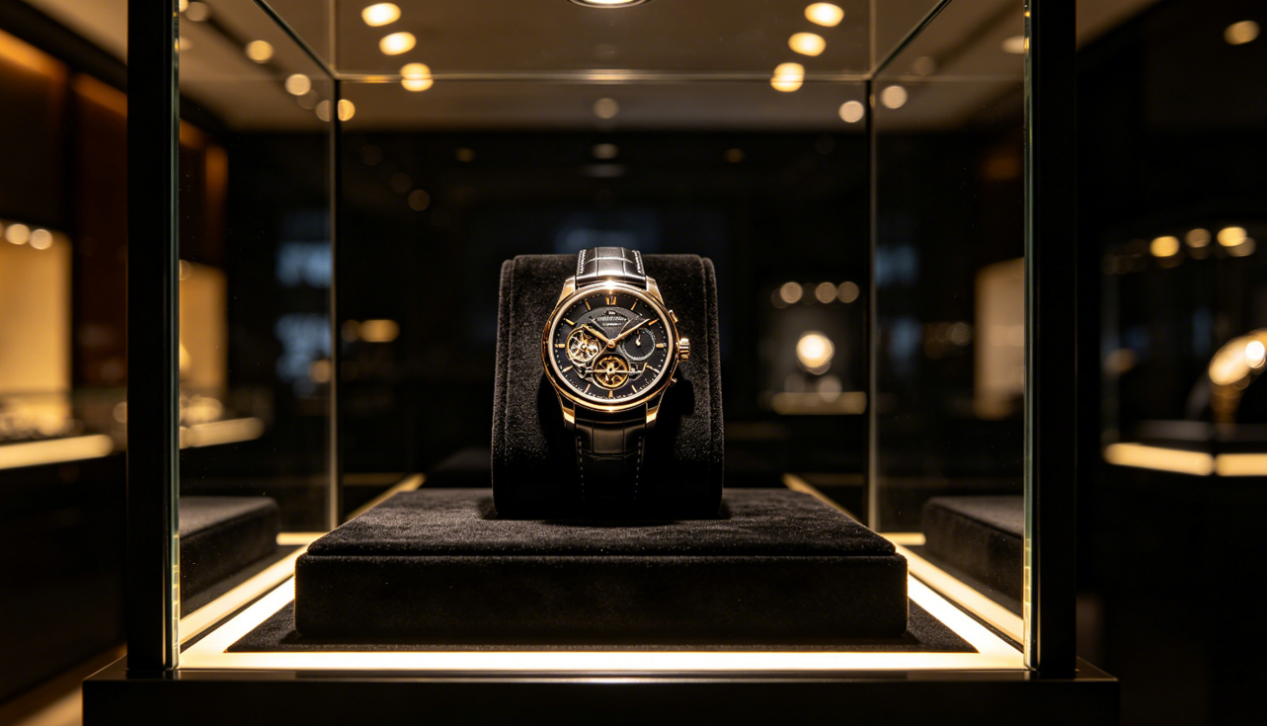
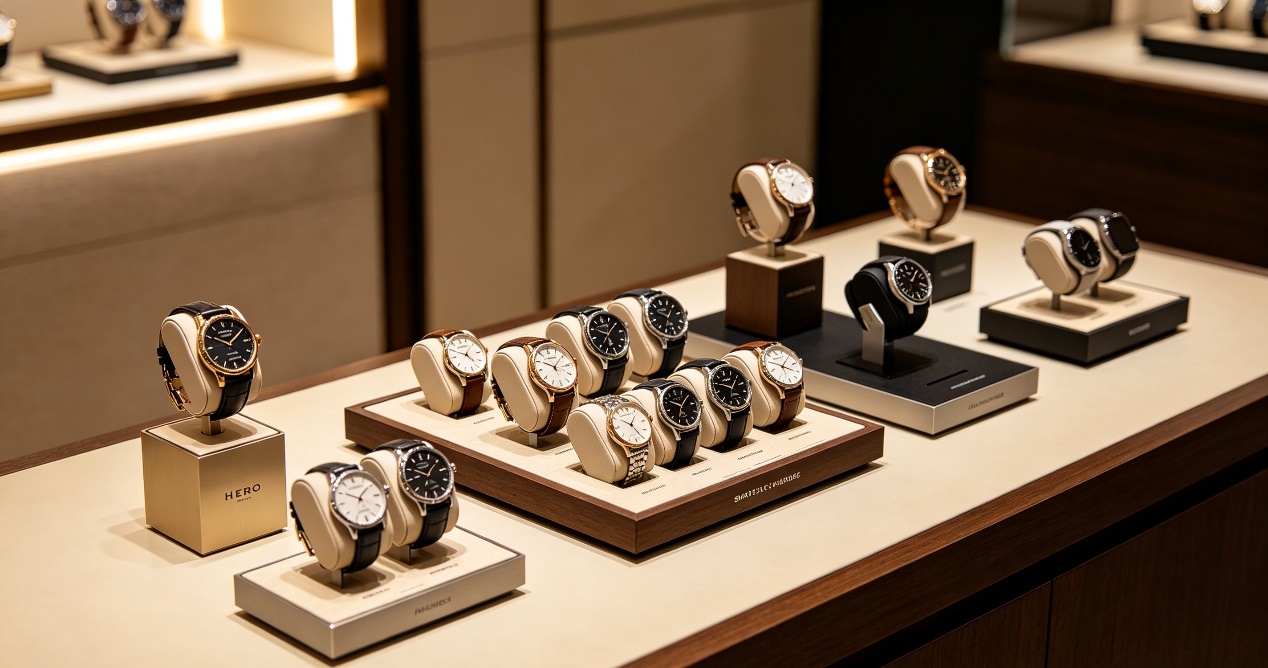
Pedestal‑style watch stands elevate single statement watches to eye‑level viewing. They are ideal for window displays, counter focal points and showcasing flagship limited‑edition models. Solid weighted bases prevent tipping. Display cushions cradle watches at a viewing angle that shows dial details clearly to passing shoppers. Materials include painted MDF, metal alloy, acrylic and wrapped PU bases. Pedestal stands prioritize visual drama and brand storytelling, though they offer limited anti‑theft protection for high‑foot‑traffic locations.
Multi‑Unit Countertop Watch Displays
Countertop multi‑slot displays arrange complete watch collections. These units organize multiple SKUs by color, collection or price tier, helping retail staff present full product ranges efficiently. Custom‑cut foam or velvet slots hold each watch securely. Modular designs allow retailers to reconfigure layout when product lines refresh. Huaxin Display frequently designs modular counter displays that can expand or shrink according to counter space constraints, an important feature for multi‑location retail chains with varying counter dimensions.
Anti‑Theft Charging Display Stands for Smartwatches
Smartwatch retail brings unique requirements: demonstration units need stable power for continuous screen operation, while retail locations require anti‑theft security. Integrated watch display stands combine built‑in wireless charging modules, alarm triggers for unauthorized removal and quick‑release mechanisms for retail staff to hand units to customers for try‑on. This category of display requires precise hardware engineering alongside casing aesthetics. Poor‑quality charging stands suffer from unstable charging contact or overly sensitive false alarms, which hurt retail‑staff efficiency.
When ordering watch display stands, always test physical try‑on workflows. A good display lets sales associates remove a demo watch quickly for customer testing without complex tools, while still discouraging theft. Material durability is also key: retail fixtures endure daily handling, so low‑grade thin acrylic will scratch and degrade rapidly in store environments.
Branded Retail Racks for Watch Boutiques & Showrooms
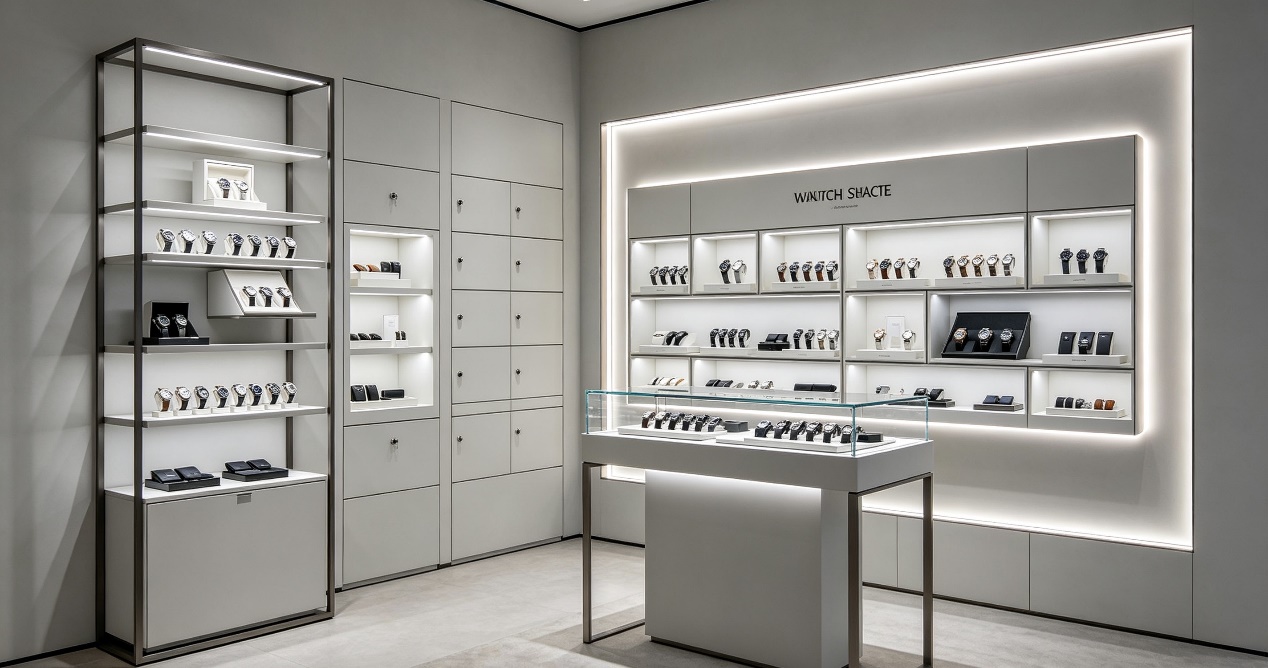
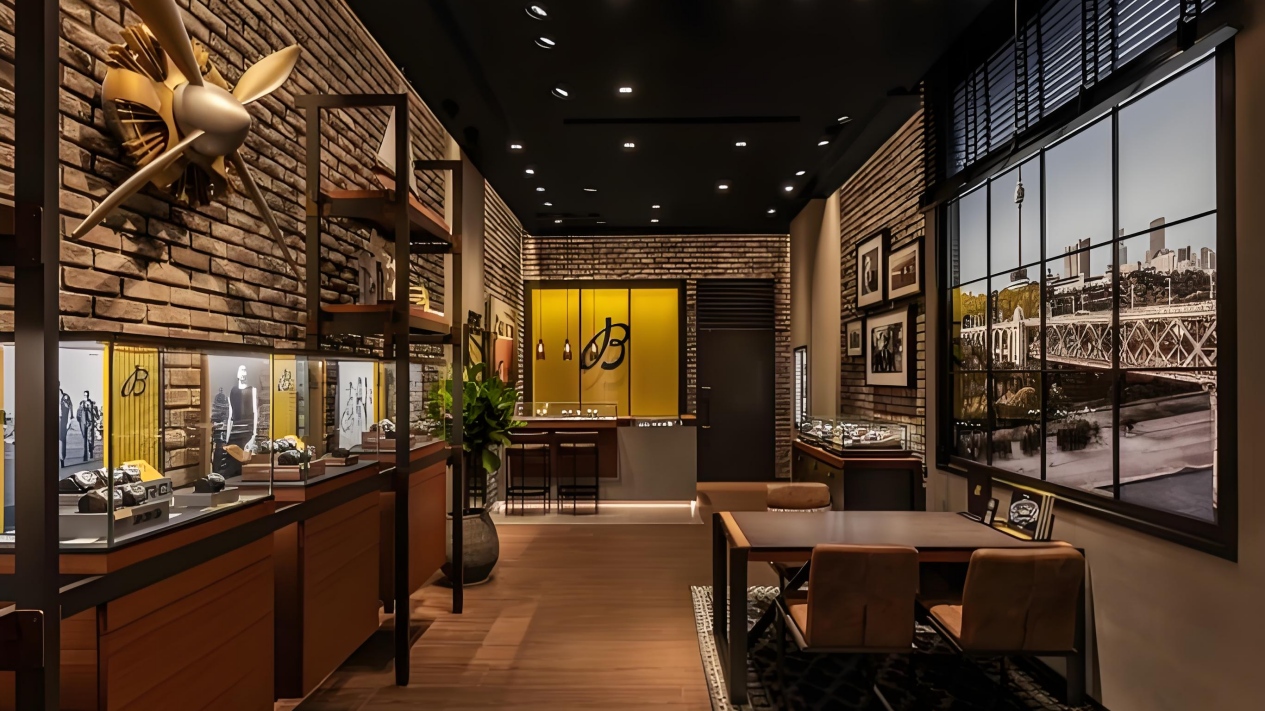
For larger retail spaces, branded retail racks complete the in‑store presentation ecosystem. Wall‑mounted racks, freestanding floor racks and back‑counter cabinet systems organize stock, demo units and related watch accessories such as straps, watch winders and care kits.
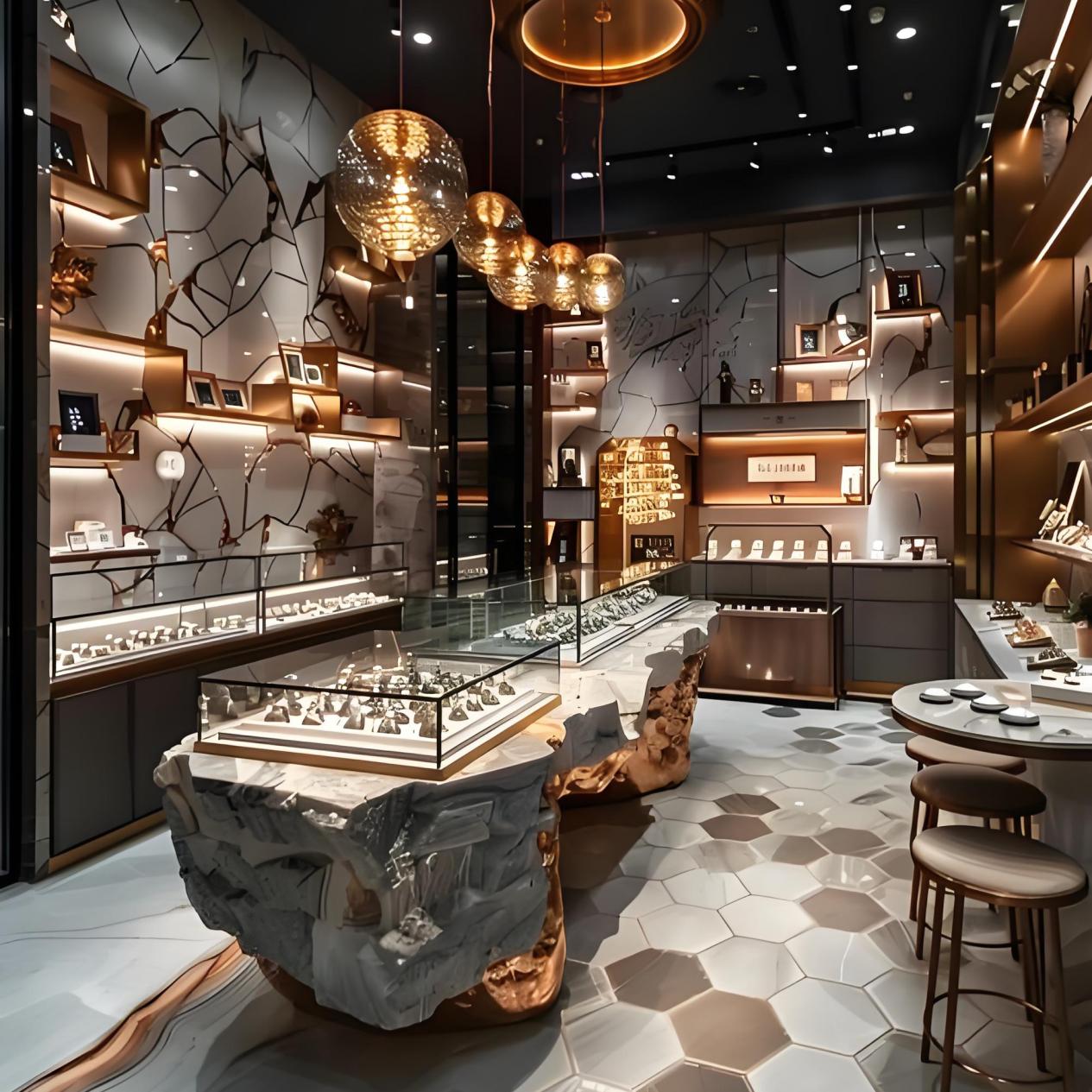
Floor‑standing branded retail racks serve as zone dividers inside watch boutiques. They can combine open display sections for demo watches and closed locked storage compartments for high‑value inventory. Custom‑printed brand panels, metal logo plates and integrated LED lighting options enhance the premium retail atmosphere. Wall‑mount racks optimize limited counter space for smaller boutiques and airport duty‑free shops.
Key considerations for retail rack procurement: measure exact retail floor and wall dimensions before finalizing drawings. Factor in transportation: large‑format racks should ideally be designed for flat‑pack shipping to reduce freight cost and risk of transit damage. Confirm assembly complexity for in‑store teams. Huaxin Display provides assembly documentation for all custom retail rack projects, supporting global retail roll‑outs for international watch brands.
Sourcing Best Practices: OEM & ODM Workflow, Samples & Sustainability
Working with an experienced packaging and display manufacturer streamlines your project and reduces costly mistakes. Based on Huaxin Display’s decades‑long project workflow, here are actionable buying tips for watch‑industry procurement teams.
1.Begin with precise product specifications
Provide manufacturer exact watch case diameters, strap widths, accessory dimensions and retail counter / wall measurements. Supply high‑resolution brand‑identity guidelines including color codes, logo files and preferred branding techniques. Without precise reference data, prototype samples will require repeated revision cycles, extending total lead‑time.
2.Prioritize physical sampling before mass‑production
Never skip sample evaluation. Physical samples allow you to test box fit, opening‑and‑closing feel, logo effect, lining quality, and display‑stand stability. Test‑ship sample watch boxes to simulate logistics stress and check for transit‑related wear. Sampling cycles commonly run from 10‑18 working days, followed by revision iterations as required.
3.Understand MOQ and lead‑time expectations
Fully custom watch boxes and retail displays carry higher minimum‑order‑quantities than generic stock items. Discuss MOQ flexibility for new‑brand launches and small‑batch limited editions. Confirm total project timeline: sample approval, mass‑production cycle and sea‑freight or air‑freight transit times for your target market. Build buffer time into your project schedule for product‑launch deadlines.
4.Sustainability and compliance requirements
Global watch brands increasingly face regulatory and consumer pressure for responsible packaging. Discuss recycled cardboard, FSC‑certified timber stock, water‑based printing inks and vegan‑material alternatives with your manufacturer. Confirm material compliance for target export markets. Huaxin Display maintains ISO‑9001 quality management, implementing raw‑material inspection and multi‑stage finished‑goods quality checks before shipment.
5.Avoid common buying pitfalls
Common procurement errors include: choosing packaging dimensions based on estimated watch size rather than exact measurements; prioritizing low unit cost over material durability for retail‑use displays; overlooking flat‑pack shipping feasibility for large retail racks; neglecting to test how demo watches load and unload from display hardware. All of these oversights create extra costs and operational headaches after mass‑production completes.
Final Thoughts
Luxury watch packaging and retail displays do not exist in isolation. High‑performance solutions create a consistent brand journey: from unboxing at customer purchase, through in‑store browsing experience, to long‑term product protection. Premium watch boxes preserve timepiece condition and elevate unboxing rituals; carefully engineered watch display stands bring out the beauty of your watch collections for shoppers; branded retail racks organize your full assortment while strengthening brand presence across retail locations.
Whether you are launching a new mechanical‑watch collection, expanding a smart‑watch line or refreshing boutique retail fixtures, partnering with an integrated OEM‑ODM manufacturer like Huaxin Display enables you to align packaging, counter displays and retail racks to your brand vision, product specs and real‑world retail operating needs. Starting your project with clear specifications, thorough sample validation and realistic timelines will deliver packaging and display assets that protect your products, impress customers and support sustainable sales growth for your watch brand.